How Exercising Improves Sleep Patterns
Every night, millions of Americans are plagued by a lack of sleep. There is a plethora of reasons why this is. Some point their frustrations to things like stress, anxiety, and other mental health issues. While others, blame things like an irregular sleep schedule due to work or other responsibilities.
With there being so many enemies to our sleep, many wonder if there is an easy and cheap solution to overcoming such a dilemma. People often turn to over the counter medications like melatonin or gaba. These are common relaxants that help people to calm down and assist them in falling asleep. Additionally, people will spend thousands of dollars to attend sleeping tests and to be analyzed about their sleep patterns. Afterwards, they will spend even more money purchasing prescriptions that may result in little to no effectiveness.
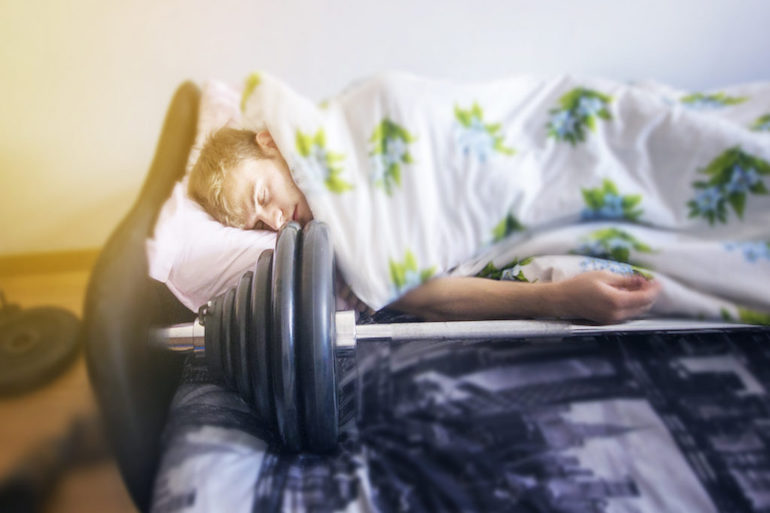
A lack of sleep can leave individuals feeling tired, lowered mental capacity, lack of motivation, and impairments in physical, mental, and emotional health. A lack of sleep can attack every system in your body. It effects your central nervous system and can cause spikes in suicidal thoughts, mood swings, and paranoia. Lowers your immune system making you more susceptible to diseases. Alters your respiratory and digestive systems making it more difficult to breath and digest food correctly. And can cause heart problems like blood pressure, blood sugar, and inflammation levels.
Although it may be difficult to exactly pinpoint why, exercise has long been commonly linked to better sleep. Charlene Gamaldo, M.D., and medical director at John Hopkins Center for Sleep, says that “researchers don’t completely understand how physical activity improves sleep. However, we do know that moderate aerobic exercise increases the amount of slow wave sleep you get. Slow wave sleep refers to deep sleep, where the brain and body have a chance to rejuvenate. Exercise can also help to stabilize your mood and decompress the mind, a cognitive process that is important for naturally transitioning to sleep.”
Although exercising leads to better sleep, it is very important to pick what time you decide to exercise. A simple example of why, is that often people take supplements that are full of caffeine and give people a large spurt of energy. Trying to go to bed relatively soon after working out may make it even harder for people to fall asleep.
Another reason why choosing to not exercise before going to bed is because exercising raises the body’s core temperature and causes the brain to release endorphins. After completing a exercise session, the body may need anywhere from 30 to 90 minutes to resettle into a homeostatic state. Also, the large influx of endorphins will cause the brain to believe that it is still awake and time to be active. It will take time for the brain to settle.
In conclusion, it would appear that the two are harmonious. Danielle Pacheco calls this a “bidirectional relationship. In other words, optimizing your exercise routine can potentially help you sleep better and getting an adequate amount of sleep may promote healthier physical activity levels during the day.” The tricky part is just getting started.
Resources
· The Effects of Sleep Deprivation on Your Body
· Bidirectional Relationship Between Exercise and Sleep
· Quick Facts about Exercise and Sleep
DISCLAIMER: This is for a class assignment; it is not a real blog.
Hello Braydon thank you for your blog. I have used this in my life to both help me fall asleep but to also help wake me up in the morning. I like how you talked about needing around 90 mins for your body to relax after a workout. When i first started working out before going to bed i would not give myself the 90 mins. As soon as i was done working out i would get in bed. In the mornings i enjoy working out the most to wake me up. Getting my heart rate up and getting my body moving really helps me become more alert and ready for my day. It is a really healthy, cheap way to improve your sleep and your overall health.
ReplyDeleteBraydon, Great blog post about sleep. I never realized how in depth sleep research has gotten until I went to nursing school. Learning about the different stages and what our body needs to actually rest and rejuvenate, has been pretty cool to learn about. It is interesting that you choose this as your topic. I learned how exercise affects our sleep and when it is appropriate to exercise in order to get a better night sleep. It makes total sense to not exercise before bed. I think this is one of the main reasons it is recommended to exercise in the morning.
ReplyDelete